Alerts
Monitorifsh performs real time fraud detection using VMS, logbook and regulations data. The types of fraud currenlty detected are :
trawling in the french 3 nautical miles coastal strip
fishing in the french 12 nautical miles coastal strip by a non-french vessel (excluding historic fishing rights for certains states)
fishing in the french Exclusive Economic Zone (EEZ) by a non-Community vessel
undeclared fishing activity : VMS track showing fishing activity with no corresponding Fishing Activity Report (FAR) in the electronic logbook
undeclared departure at sea : VMS track showing a departure at sea with no corresponding Departure (DEP) declaration in the electronic logbook
suspicion of under-declaration : fishing effort non consistent with declared quantities
RTC fishing alert : VMS track showing fishing activity in a Real Time Closure (RTC) area
NEAFC fishing alert : VMS track showing fishing activity in the NEAFC area (subject to authorization by NEAFC)
exceeding the maximum authorized blue ling (BLI) quantity held onboard : logbook data showing more than 6 tons of blue ling (BLI) onboard a vessel present in area 27.6.a, which is the maximum quantity authorized by R(UE) 1241.
user-defined configurable alerts : to detect ad-hoc behaviour, focus monitoring in a certain area…
When signs of fraud are detected on a vessel, it appears on the map with a red halo :
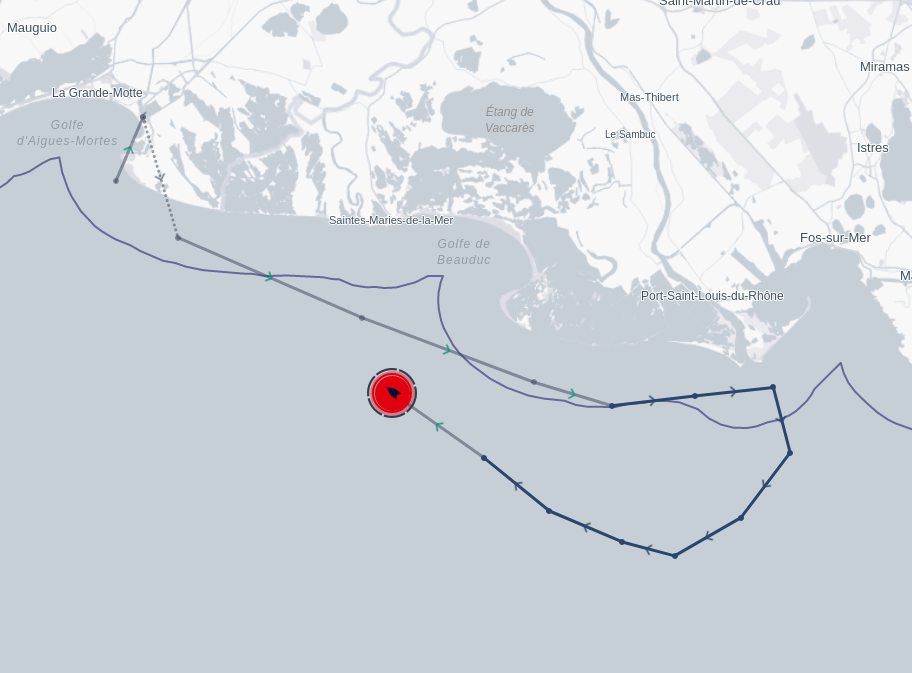
Map showing a vessel’s VMS track which presents signs of illegal trawling in the 3 nautical miles coastal strip
Alerts are then humanly checked and validated / invalidated. Validated alerts become reportings which are stored in the Monitorfish database and added to the vessel’s history.
Alerts make use of the fishing detection algorithm of the enrich position flow.